Foreword to trading
People in the market seldom agree about prices. While one expects a stock to rise, another thinks it has climbed far enough - each has their own reasons behind their thought. But the final answer always comes from the market. Trading is the process of buying and selling financial instruments to benefit from changes in their prices. It can involve shares, bonds, currencies, commodities, futures, options and other securities or contracts. The instruments differ, the risks differ, and the methods differ. The uncertainty remains. With online trading, you can analyse markets, place orders and monitor positions through a digital platform. But access is not expertise, and a quick order is not necessarily a good decision. Learn how trading works, how traders approach the market, and what you should understand before risking your money. This article teaches you all that.
What exactly is trading?
Trading involves buying and selling a financial instrument according to an objective. A trader may seek to profit from a rising price, a falling price or a change in volatility, depending on the instrument and strategy.
For example, a trader buys a share at ₹500 and sells it at ₹520. Before costs, the price difference produces a gain of ₹20 per share. If the trader sells at ₹480 instead, the loss is ₹20 per share.
The arithmetic is simple. Deciding when to enter and exit is the difficult part.
A trading strategy sets out the conditions under which a trader will buy, sell, or stay out of the market. It may rely on company fundamentals, price patterns, technical indicators, market news, or a combination of factors.
Some traders make decisions manually. Others use algorithmic trading to apply predefined rules systematically. Neither approach removes uncertainty or guarantees a profitable result.
Trading vs Investing: What Makes Them Different?
Both involve financial markets, but trading and investing differ in their time horizons and objectives. Investors buy assets that appreciate over several years or generate income on a regular basis. Traders focus on price movements over shorter periods (minutes/hours/days), although trading strategies can also operate over weeks or months. Neither approach can be held superior over the other. The right choice depends on your objectives, resources, knowledge and tolerance for losses. The mistake is to treat trading as a faster version of investing. They require different habits, and active trading can demand far more time and attention.
How Does the Securities Market Work?
A securities market brings together buyers and sellers who want to transact different financial instruments at different prices.
A buyer submits a bid: the price they are willing to pay. A seller submits an ask, or offer: the price they are willing to accept. When compatible orders meet, a transaction can take place.
The difference between the best available ask and bid is called the spread. A narrow spread can reduce trading costs, while a wider spread can make entering and exiting a position more expensive.
Prices change as orders arrive, market expectations shift, and participants respond to new information. Liquidity, trading volume, and volatility also affect how easily an order can be executed.
A trading app gives you access to market information and order-placement facilities, depending on the service. It does not guarantee that an order will execute at the price you expect.
That distinction matters. Seeing a price on a screen and getting a trade filled at that price are not always the same thing.
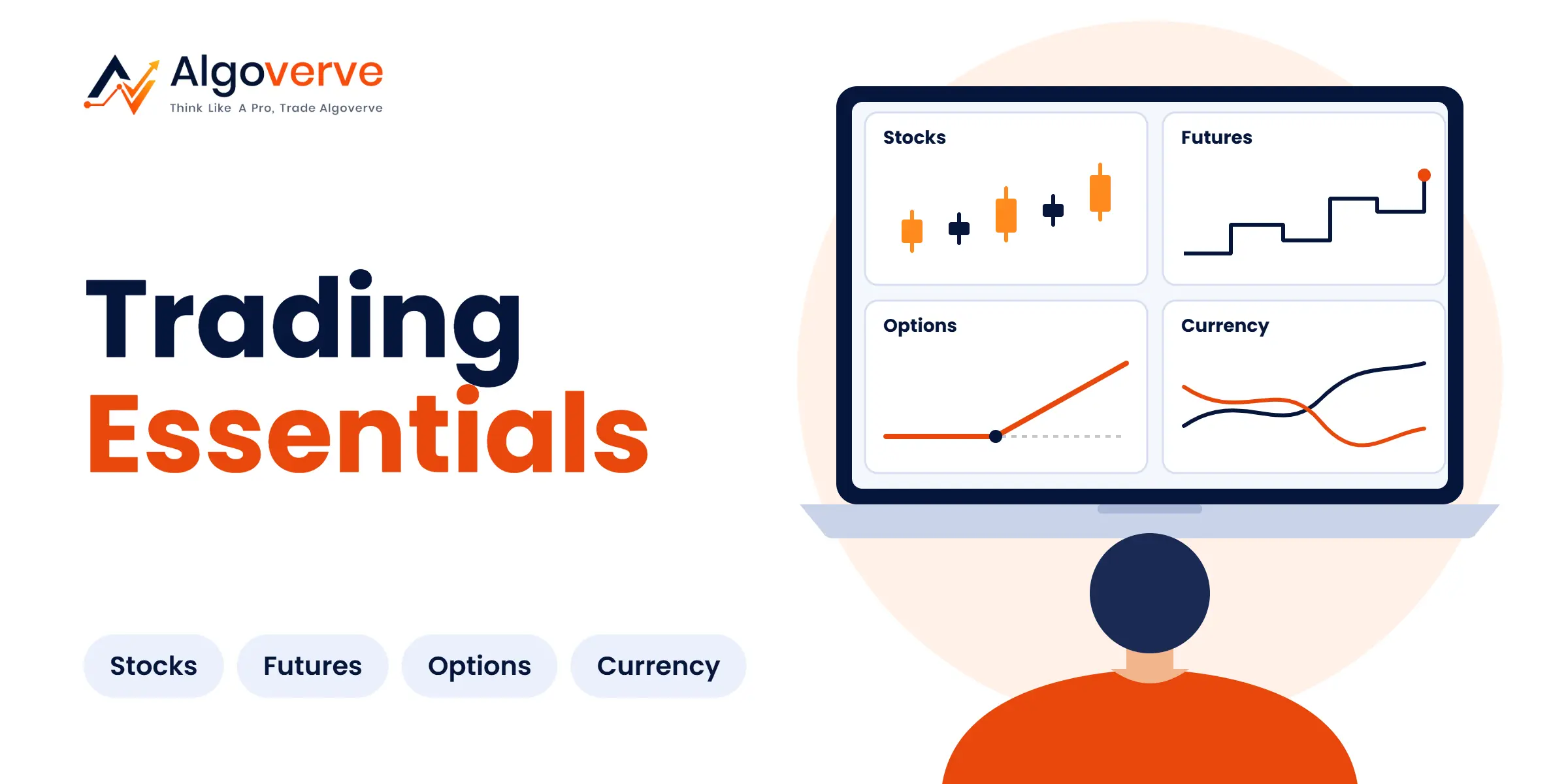
What Can You Trade?
The instruments available to you depend on your broker(s), account permissions, the relevant exchange and applicable regulations.
Stocks and shares
A share represents ownership in a company. Traders may buy shares in anticipation of a price increase or, where permitted and supported, take positions designed to benefit from a decline.
Company earnings, industry developments, economic conditions and market sentiment can all affect share prices.
Futures and options
Futures and options are derivatives whose values are linked to an underlying asset or reference value.
Futures create obligations under the contract, while options give the buyer a right under specified terms. Their payoff structures, margin requirements, and risks differ.
Some option trading strategies are designed for rising markets, some for falling markets, and others for particular volatility conditions. But complexity is not an advantage by itself. Before trading derivatives, understand how the position behaves when the market moves against you, when volatility changes, and as expiry approaches.
Currencies and commodities
Currency trading involves exchange rates. Commodity trading may involve instruments linked to products such as gold, crude oil, or agricultural goods.
Access, contract specifications, trading hours and regulatory requirements vary by market and jurisdiction. Do not assume that every instrument visible on a chart is available for trading through your account.
CommonTypes ofTrading
Different trading styles use different time zones and methods. There is no single, universal style that works best in every market.
Day trading
Day traders generally open and close positions within the same trading session. They seek to benefit from short-term price movements. Careful attention to execution, costs, and risks is important, since frequent trades can generate frequent losses just as easily as frequent gains.
Swing trading
Swing traders aim to capture price movements over several days or weeks. They may use technical patterns, momentum, support and resistance, or fundamental developments to identify opportunities. Holding a position overnight or across several sessions introduces additional exposure to news and price gaps.
Position trading
Position traders generally hold trades for longer periods, sometimes for weeks and months. They focus on broader trends, economic developments or longer-term technical and fundamental signals. The lower frequency of transactions does not eliminate risk, while a longer holding period can expose a position to larger market changes.
Automated trading
Automated systems use programmed rules to generate signals, manage positions or place orders, depending on their design and permissions. With algo trading, the trader defines the conditions and the system applies them. The outcome depends on the strategy, the assumptions behind it, the execution environment, and the risk controls.
Automation can reduce some repetitive manual decisions only; not turn a weak idea into a sound one through execution.
Market Analysis: How do the traders do it?
Traders analyse the market to form and evaluate ideas. They take two common approaches: fundamental analysis and Technical analysis.
Fundamental analysis: Fundamental analysis is often associated with investing, but traders can use it to assess events that may affect prices over shorter periods. Fundamental analysis examines factors with potential to influence an asset's value. For stocks, these include earnings, revenue, debt, cash flow, competition, and the company's prospects, as well as economic conditions and industry developments.
Technical analysis: Technical analysis studies market data - particularly price and volume- to identify patterns, trends, and potential trading conditions. Traders use moving averages, momentum indicators, support and resistance levels, and candlestick patterns among the most common tools, which help to organise observations. An indicator, however, isn't a means to predict the market. Signals are specific to market conditions. Online trading platforms provide charting and analysis tools for supported markets, which a trader can use to study price movements, create alerts, and test rule-based ideas.
Charting, strategy testing, and order execution are distinct functions. A signal on a chart does not always mean a trade has been placed.
Risk Management in brief
Decide how much exposure you should take and how you’re to respond if the trade does not go as planned. That’s risk management. You must consider the possible loss before entering a position, rather than trying to invent an exit after the market turns against you.
Take the following steps to minimise trading risks.:
- Define entry and exit conditions before you place an order.
- Set position sizes to reflect the risk(s) involved.
- Understand leverage, margin, and the possibility of rapid losses.
- Include applicable charges, including brokerage, taxes, and other fees, to determine the buying/selling price of instruments.
- Distribute your capital over several instruments rather than in one
- Review performance across a meaningful sample of trades.
Using stop-loss may help manage exposure, but expect no guarantee for specific execution prices in every market condition. Slippage, gaps, liquidity shortages, and technical problems - all affect an outcome.
Good risk management is not about making every trade succeed. It is a way to prevent decisions (one or more) from causing irreversible financial damage.
Can You UseTechnology toTrade?
Modern platforms make it easier to examine markets, test ideas, and place orders. The useful question is not how many features a platform offers, but whether those features help you make and execute better-informed decisions.
A capable online platform for trading may provide charts, market data, order types, alerts, portfolio information, and other tools. The exact facilities depend on the provider and your account.
When comparing the best online trading platform in India, look at the broker's regulatory status, the instruments available, charges, order execution, and support. The same checks apply when searching for the best trading app, the best application for trading, or the best online trading platform for your needs.
Search results may also describe a service as the best-rated trading platforms, the best trading app in India, or the trading app best suited to a particular audience. These phrases are not evidence of quality on their own. Assess the underlying features and terms instead.
What Does It Take to Start Trading?
No single capital amount applies to every instrument or strategy. It all depends on the product and the contract specifications: margin requirements, broker rules, and how much you can reasonably put in for trading.
A sensible starting process is:
- Learn the instrument. Understand its price behaviour, contract terms, trading hours, and risks.
- Choose an appropriate broker. Verify its regulatory status and review its charges and supported services.
- Develop a trading plan. Define what creates a trade, when to exit, and how much exposure to take.
- Practise and test. Use simulation or historical testing where suitable and available.
- Review the evidence. Examine losses, costs, execution, and performance across different conditions.
- Monitor your decisions. Keep records and revise a strategy when evidence, not frustration, justifies it.
If you are new to trading in Indian markets, begin by understanding the rules and products available in India rather than assuming that guidance written for another country applies unchanged.
Do not trade with money needed for essential expenses, and do not borrow simply to increase your position size.
FAQ
No. Trading usually focuses on taking positions to benefit from shorter-term price movements. Investing focuses on longer-term financial objectives. Both involve risks of their own.
Access to a platform does not replace education or experience. Start by understanding the instruments, costs, order types and risks before getting into real trading.
No. Both are good in their own ways. Algorithmic trading can apply defined rules consistently, while manual trading allows discretion. Both can fail, and both require a sound process and appropriate risk controls.
Options can be used to construct positions for different market conditions, but their payoffs can be complex. Profitability depends on the strategy, price movement, volatility, time to expiry, costs, and execution. Losses can be substantial.
Consider regulatory status, supported instruments, fees, reliability, order types, market data, risk-management facilities and customer support. Choose based on your requirements, not promotional rankings alone.