Stock market trading is not about finding a stock that will double in price overnight. It starts with understanding what you are buying, why its price may be moving, and how you will respond if the market goes against your expectations.
Today, online trading makes financial markets more accessible than ever. Beginners can learn through educational websites, books, courses, market data, trading simulators, and other reliable resources without visiting a trading floor.
However, access to the market and understanding how it works are two different things. Opening a trading account does not automatically prepare you for market volatility, unexpected losses, or difficult decisions. You need a clear understanding of market trading before risking your money.
Start with the fundamentals. Learn about stocks, exchanges, order types, market risks, and the difference between trading and investing. Then explore charts, research methods, and trading strategies. The goal is to make informed decisions based on evidence rather than excitement or speculation.
You do not need to master everything at once. Learn one concept at a time, practise consistently, and understand the risks before moving to real-money trading.
What You Will Learn
- Stock market basics: Understand shares, exchanges, trading accounts, and the factors that influence prices.
- Reliable learning resources: Use educational articles, books, courses, market research, and practical exercises to build your knowledge.
- Market analysis: Learn how to interpret charts, follow relevant news, and evaluate potential trading opportunities.
- Strategy testing: Understand how paper trading and backtesting can help you evaluate a trading approach before committing capital.
- Risk management: Set financial limits, define your trading rules, and learn how to review your performance.
How to Start Stock Market Trading: 9 Easy Steps
1. Understand How the Stock Market Works
Before buying your first share, understand what you are purchasing.
A stock represents ownership in a company. When you buy shares, you acquire a stake in that business. Share prices fluctuate as buyers and sellers respond to company performance, economic conditions, interest rates, news, and expectations about the future.
Start by learning how stock exchanges work, who participates in the market, and how buy and sell orders are matched. In India, the National Stock Exchange (NSE) and the Bombay Stock Exchange (BSE) are two major stock exchanges.
You should also understand the difference between the cash market and derivatives. In the cash market, investors and traders buy and sell shares. Derivatives, including futures and options, derive their value from an underlying asset and involve additional risks.
Learn these essential terms:
- Stock exchange: A regulated marketplace where eligible securities are traded.
- Trading account: An account used to place orders through a broker.
- Demat account: An account used to hold securities electronically.
- Market capitalisation: The total market value of a company's outstanding shares.
- Liquidity: How easily an asset can be bought or sold without significantly affecting its price.
These concepts form the foundation of stock market trading. Without them, a price chart is simply a line moving across a screen.
2. Learn the Basics of Online Trading
Once you understand the market, learn how individual trades work.
Online trading platforms allow users to place orders electronically through a broker. Before placing your first order, understand the different order types and the costs involved.
The most important concepts include:
- Market order: An instruction to buy or sell at the best available prices. The final execution price is not guaranteed.
- Limit order: An instruction to buy or sell at a specified price or better. Execution is not guaranteed.
- Bid and ask: The highest current bid to buy and the lowest current offer to sell.
- Trading volume: The quantity of shares or contracts traded during a period.
- Brokerage and other charges: Costs that can affect your overall trading results.
- Settlement: The process through which securities and funds are transferred after a trade.
You should also understand order modification, cancellation, and exit procedures. Fast-moving markets can produce unexpected execution prices, particularly when liquidity is limited.
Think of order types as the controls of a vehicle. Knowing how to accelerate is useful, but understanding how to stop matters just as much.
Before using real money, practise navigating your broker's order screen and learn how each order type behaves.
3. Learn to Read Stock Charts
Price charts help traders examine how an asset has moved over time. They can reveal patterns, trends, and potential trading opportunities, but they cannot reliably predict every future price movement.
Begin with the basics of technical analysis:
- Candlestick charts: Show price information for a selected period, including opening, closing, high, and low prices.
- Trends: Help identify whether prices are generally moving upward, downward, or sideways.
- Support and resistance: Identify price areas where buying or selling pressure has previously appeared.
- Trading volume: Shows the number of shares or contracts traded during a period.
- Breakouts and breakdowns: Describe prices moving beyond an established range or level.
For example, a stock moving above a resistance level alongside stronger trading volume may indicate increased buying interest. However, the breakout can fail, and the price may move back into its previous range.
Avoid filling your chart with too many indicators at the beginning. Learn basic price behaviour first, then explore additional tools when they serve a clear purpose.
A chart should help you evaluate a trading idea, not convince you that a trade cannot lose.
4. Study Fundamental and Technical Analysis
Fundamental analysis and technical analysis are two widely used approaches to studying financial markets. Each answers different questions.
Fundamental analysis
Fundamental analysis examines a company's financial health, business model, earnings, debt, valuation, competitive position, and growth prospects.
It can help investors assess whether a company's shares are reasonably valued relative to its business and prospects.
For example, an investor may review revenue growth, profit margins, cash flow, and debt before deciding whether a stock deserves further research.
Technical analysis
Technical analysis studies price movements, trading volume, trends, and chart patterns to identify potential entry and exit opportunities.
A trader might use a moving average, support level, or price breakout as part of a predefined trading strategy.
Neither approach guarantees a successful outcome. A financially strong company can experience falling share prices, and a promising technical pattern can fail.
Your choice depends on your objectives and trading style. Long-term investors may focus more heavily on business fundamentals, while short-term traders may place greater emphasis on price behaviour and market conditions. Many market participants use both.
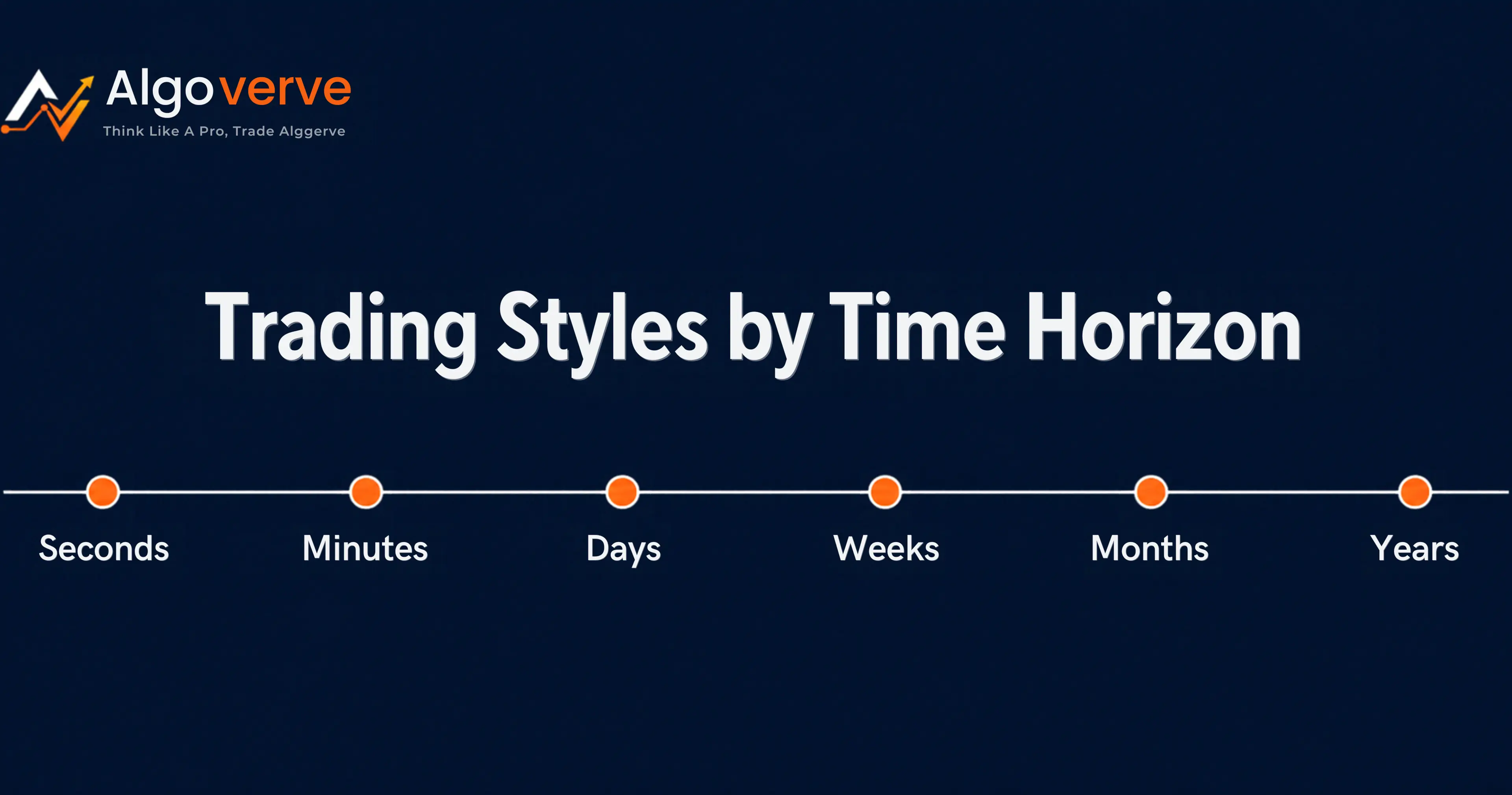
5. Choose a Trading Style That Fits Your Needs
Not every trader needs to watch the market throughout the day. Your trading style should match your available time, experience, financial circumstances, and risk tolerance.
Intraday trading
Intraday traders open and close positions within the same trading session. This approach requires attention to price movements, execution costs, and disciplined risk management.
Swing trading
Swing traders typically hold positions for several days or weeks, seeking to benefit from price movements over a shorter period than long-term investors.
Positional trading
Positional traders may hold positions for weeks or months, depending on their strategy and market outlook.
Algorithmic trading
Algorithmic trading uses predefined rules and computer systems to identify trading conditions and, where configured, execute orders automatically. The system follows the rules provided to it, but automation does not remove market risk.
If you are interested in futures and options, understand their mechanics before exploring option trading strategies. Options involve variables such as strike price, expiry, premium, volatility, and time decay. Some options positions can expose traders to substantial losses.
Do not select a trading style simply because someone online claims it is profitable. Choose an approach you can understand, practise, and evaluate consistently.
6. Develop a Trading Strategy With Clear Rules
A trading strategy turns a general market idea into a repeatable decision-making process.
It should explain:
- When a trade can be entered.
- What conditions invalidate the trading idea.
- Where and how the position will be exited.
- How position size and risk will be controlled.
- When trading should stop.
- How performance will be evaluated.
Consider a hypothetical strategy that looks for a price breakout above a defined resistance level, supported by increased volume. It also specifies an exit condition if the price falls below a predetermined level.
This example is for illustration only. It is not a recommendation to trade a particular setup.
Clear rules make it easier to test an idea and determine whether it behaves as expected. They also reduce the temptation to change decisions impulsively during a trade.
This is where algo trading becomes relevant. Algorithmic trading allows predefined conditions to be translated into executable rules. Depending on the platform and configuration, a system may manage entries, exits, stop-losses, and other instructions automatically.
For traders who prefer not to write code, a no-code strategy builder can make it easier to define and organise trading rules visually.
However, a strategy is not automatically profitable just because it can be automated. Its logic, assumptions, execution conditions, and risk controls still need careful evaluation.
7. Practise With Paper Trading and Backtesting
Before risking real money, investigate how your trading strategy behaves.
Paper trading allows you to practise trading without committing real capital. Depending on the platform, you may be able to simulate orders using live market prices. It can help you understand order workflows, test your discipline, and observe how a strategy responds to current conditions.
Backtesting trading is different. It applies a strategy's rules to historical market data to estimate how those rules would have performed in the past.
For example, a historical test may show that a strategy performed well during strong upward trends but struggled when the market moved sideways. That finding can reveal a weakness worth investigating.
Good testing involves more than looking at a final profit figure. Examine:
- Total returns after estimated costs.
- Maximum drawdown, or the largest peak-to-trough decline.
- Win rate and average win compared with average loss.
- Trading frequency and exposure.
- Sensitivity to different market conditions.
- Slippage and realistic execution assumptions.
Be careful about overfitting. A strategy can appear excellent on historical data because its rules were unintentionally tailored to past price movements. Its performance may deteriorate when conditions change.
Historical data quality, transaction costs, liquidity, and execution assumptions can also affect results.
Paper trading has limitations, too. Simulated orders may not reproduce actual fills, slippage, market impact, or the emotional pressure of losing real money.
AlgoVerve provides tools for building options strategies, analysing payoff profiles, and forward-testing strategies on live market data before committing real capital. Its trading journal can also help users review recorded results. Check the current product documentation for feature availability and limitations.
The objective is not to prove that a strategy can never lose. It is to understand its behaviour, identify weaknesses, and decide whether further testing is justified.
8. Learn Risk and Money Management
Risk management is essential to a sustainable trading process. Even a strategy with a reasonable historical record can experience losing trades and extended drawdowns.
Start by defining how much capital you can afford to put at risk. Avoid using money needed for household expenses, emergency savings, or near-term financial commitments.
Learn the following concepts:
Position sizing: Determine how many shares or contracts to trade based on your risk limit and the distance to your planned exit.
Stop-loss orders: These can help manage losses by triggering an exit when a specified condition is reached. They do not guarantee execution at the exact stop price.
Diversification: Avoid excessive concentration in one stock, sector, or related position. Diversification can reduce some risks but cannot eliminate market losses.
Risk-to-reward assessment: Compare the amount you plan to risk with the potential reward. A favourable ratio does not guarantee that the trade will succeed.
Drawdown management: Track declines in account value and decide in advance when to reduce exposure or pause trading.
For example, suppose you have ₹50,000 in trading capital and set a hypothetical maximum planned risk of ₹500 for a trade. If the entry price is ₹250 and your planned exit is ₹245, the price difference is ₹5 per share.
Ignoring charges and slippage, a position of 100 shares would correspond to a planned loss of ₹500 if the exit occurred at ₹245.
Actual losses may be higher because of gaps, slippage, liquidity conditions, or delayed execution. For derivatives, contract specifications and the potential loss profile must also be considered.
The lesson is simple: understand the potential downside before entering a position. Never assume that a possible high return automatically makes a trade worthwhile.
9. Start Small, Track Your Trades, and Review Your Results
After learning the fundamentals, developing a strategy, and practising its execution, you can assess whether you are ready to trade with real money.
If you decide to proceed, start cautiously and use only capital you can afford to lose. Do not increase position sizes simply because your first few trades are profitable.
A small number of winning trades does not establish that a strategy has a durable advantage.
Keep a trading journal that records:
- The reason for entering each trade.
- Entry and exit prices.
- Planned and actual risk.
- The result after trading costs.
- Whether you followed your rules.
- Relevant market conditions.
- Lessons to investigate before the next trade.
Review your process regularly. A profitable trade can still result from poor decision-making, while a losing trade can follow a carefully executed plan. Evaluate both the outcome and the quality of the decision.
If you move to automated trading, understand how the system places orders, how it handles failed or rejected orders, what monitoring and risk controls are available, and how you can respond if execution behaves unexpectedly.
When comparing an online broker, trading app, or online platform for trading, consider regulatory status, supported instruments, brokerage and other charges, reliability, order types, risk controls, and customer support.
Searches for the best online trading platform in India, best trading app in India, best-rated trading platforms, or best algorithmic trading software can help you build a shortlist. However, rankings and marketing claims don't replace checking the provider's credentials, terms, and suitability for your needs.
Your goal is not to predict every market movement. It is to develop a process you can understand, test, monitor, and improve.
How AlgoVerve Can Support a More Systematic Trading Process
Once you understand the basics, technology can help you organise the work involved in developing and reviewing a trading strategy.
AlgoVerve is a no-code options trading platform that brings several parts of the strategy workflow together.
Its website describes tools for:
- Strategy building: Define options strategies using visual rules without writing code.
- Payoff analysis: Examine potential expiry payoffs, breakeven levels, and maximum profit or loss under the model's assumptions.
- Forward testing: Observe how defined strategies behave against live market data without committing real trading capital.
- Trade monitoring: Review available position-level and strategy-level performance information.
- Trading journals: Record trades and analyse historical results.
Explore the AlgoVerve platform to understand its workflow and available features.
If you want to examine the tools in more detail, visit the AlgoVerve strategy builder.
Remember that trading software is a tool, not a guarantee of success. Automated strategies can lose money, and simulated performance may differ from live execution. Understand the risks, test carefully, and make your own informed decisions.
FAQs
Stock market trading involves buying and selling shares or other market instruments to seek gains from price movements. Trading outcomes are uncertain, and losses are possible.
Start by learning stock market basics, opening the appropriate accounts with a registered broker, understanding order types and costs, and practising with paper trading. Develop a strategy and risk-management plan before considering real-money trades.
The amount depends on the instrument, its price, broker requirements, transaction costs, and applicable margin rules. There is no universal starting amount. Begin by understanding the potential loss and never trade with money you cannot afford to lose.
Paper trading simulates trading without committing real capital, often using current market data. Backtesting applies a strategy's rules to historical data. Both help evaluate a strategy, but neither guarantees future results or perfectly reproduces live execution.
Algo trading, or algorithmic trading, uses predefined rules and computer systems to identify trading conditions and potentially execute orders automatically. The system's results depend on the strategy, market conditions, execution quality, and risk controls.
Beginners can learn about algorithmic trading, but they should first understand markets, order execution, and risk management. Paper trading and careful testing can help build familiarity before any decision to use real capital.
Compare regulatory credentials, available instruments, brokerage and other charges, order types, reliability, risk-management tools, and customer support. Choose based on your requirements rather than rankings or promotional claims alone.
AlgoVerve offers tools for building options strategies, examining payoff profiles, and forward-testing strategies against live market data. These tools can help you study strategy behaviour, but they cannot guarantee profits. Check the current website for feature details and availability.
Final Thoughts
Learning stock market trading takes time, practice, and patience. Start with the fundamentals, understand how orders work, learn to interpret market information, and develop a strategy with clear rules.
Use paper trading and historical testing to investigate your assumptions. Set risk limits before entering positions, keep accurate records, and review your decisions regularly.
If you later explore algo trading, remember that automation can make a process more systematic, but it cannot make an unsound strategy reliable.
Learn first. Test your approach. Understand your risks. Then decide whether you are ready to trade.
That is a more useful starting point than chasing quick profits or trying to predict every market move.