Trading sounds simple. Perhaps that's why, in recent years, trading is all over the place. Almost everybody is trading in some way or another. This is particularly true with the rise of online platforms for trading and trading blogs and forums. And yes, also the social media with discussions about financial markets abound and aplenty. However, it might not be so easy for beginners. They have a hard time understanding how financial markets operate or how trading differs from long-term investments. What are the main asset classes and, first and foremost, the principles of trading? That's what every beginner should know first. Knowing just: Buy something. Wait for the price to rise. Sell it. — isn't going to work. For intermediate and advanced traders, we have an entire goldmine waiting. Have patience.
Trading Titbits
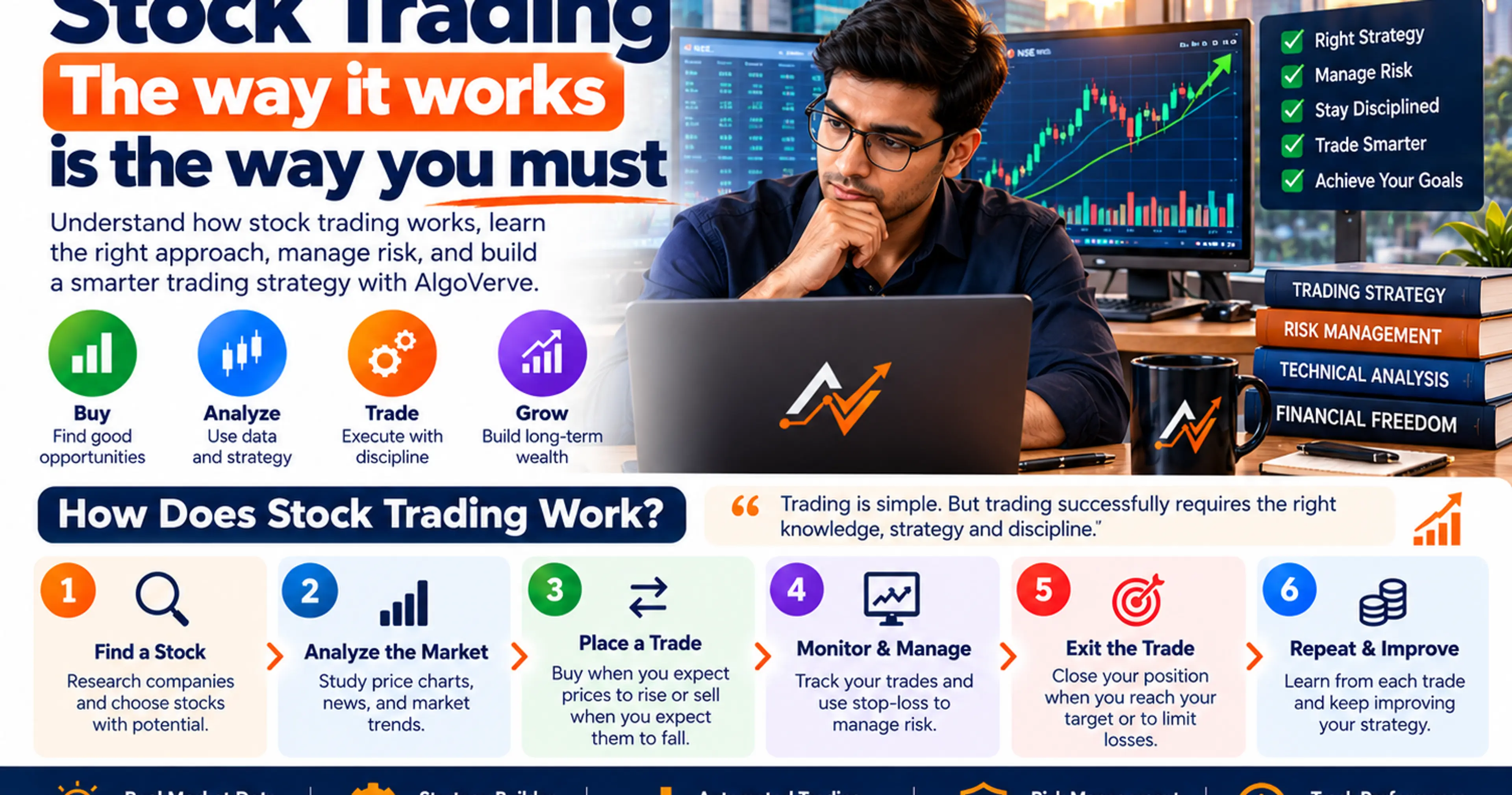
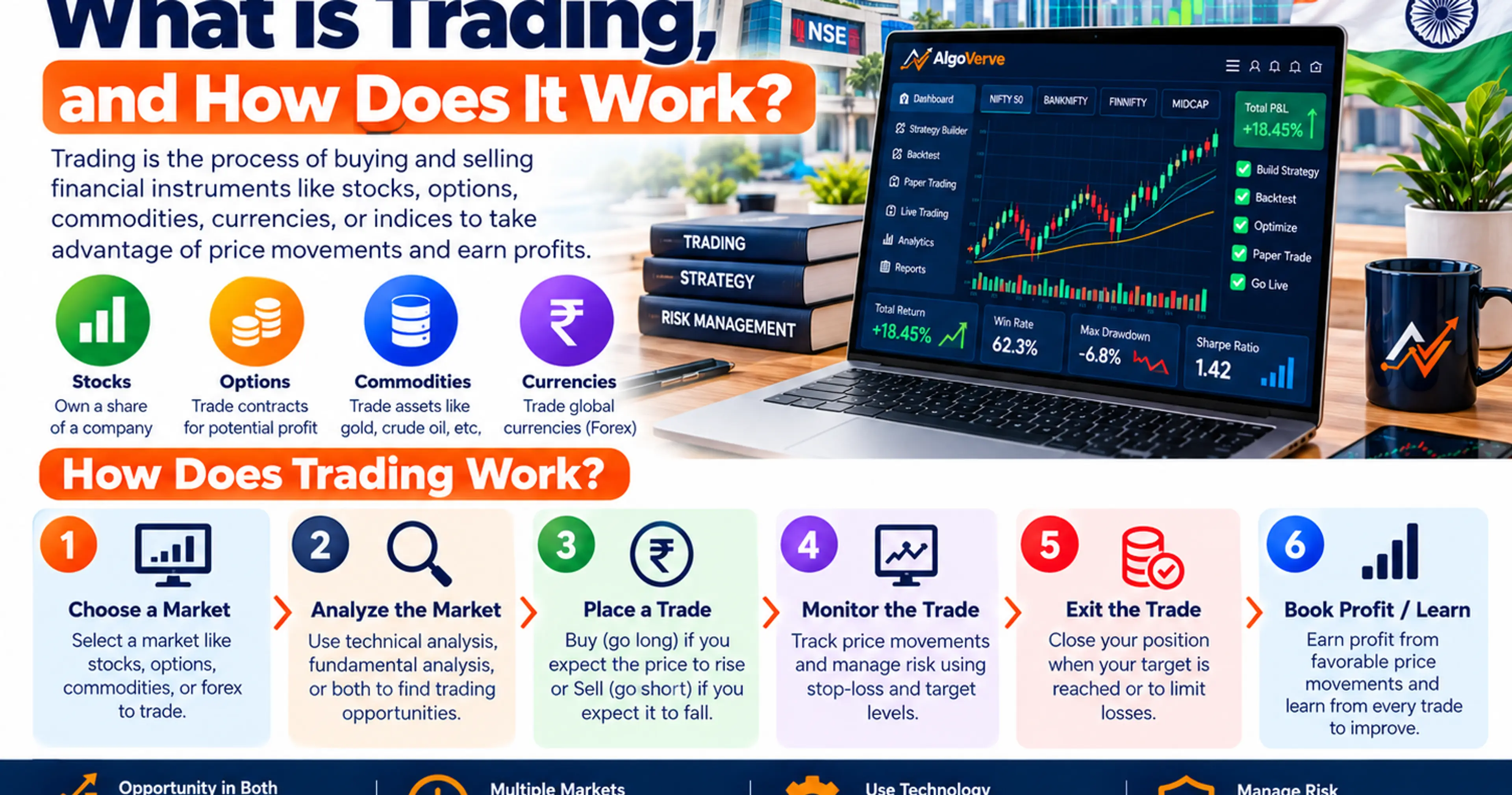
At its most basic, trading is the buying and selling of financial instruments. You aim to profit from their price changes. Trading is different from investing in many aspects. Duration/span, objectives, methods — everything differs. An investor may buy an asset because they believe its value will compound over years. A trader buys to benefit from the price rises while holding the position. The position could be held for months, weeks, days, hours… even minutes. A trader can make a decision at any time, unlike with an investment. So trading is buying or selling, but that depends on why you took the position or are letting it go, how much you risked, and what will make you leave or reconsider. When you answer those questions clearly, you enter the actual trading zone. Only then can you trade well. But double-check your limits on how much to trade. Know what to trade and when to enter and exit trading with a particular financial instrument. You also need to stay vigilant for changes in market conditions.
This isn't " I think this will go up. Neither a market trading strategy. An opinion, and that's about it.
Where Trading Stands Different From Investing
The distinction is useful, but it is not a law of nature. And neither approach is automatically superior.
The Way Financial Markets Work
Financial markets bring together the buyers and the sellers. The prices you see are the balance between buying and selling. That balance fluctuates with news coming in, earnings accumulated, varying interest rates, economic data, expectations, and sentiment. They alter what participants are willing to pay or accept for an asset. A more practical detail that beginners often discover later than placing their first trade is that the mystical price called the market price doesn't exist.
Bid A price someone is currently willing to pay. |
|---|
Ask: A price at which someone is currently willing to sell. |
|---|
What Can You Trade?
Stocks
Stocks represent ownership in companies. Their prices can respond to earnings, corporate announcements, sector developments, economic conditions, and changes in investor expectations. A stock can move sharply because the company did something. It can also move sharply because the market expects something else.
Indices
An index is not one big stock. It is a measure constructed from multiple securities, tracking the performance of a group of securities. Trading indices can provide exposure to a broader section of a market rather than the fortunes of one company. The S&P 500, Nifty 50, and FTSE 100 are examples; they represent baskets of stocks rather than individual businesses.
Nifty 50 →
Forex
Foreign exchange trading involves one currency against another, like EUR/USD, representing the value of the euro relative to the US dollar. Currency prices can be affected by interest rates, inflation, economic growth, central-bank policy, and geopolitical developments. Unlike a company whose business can be inspected through financial statements, a currency pair is an expression of the relative value of two economies and their currencies.
Commodities
Gold, oil, natural gas, and agricultural products are among the commodities traded in financial markets. Their prices can respond to supply, demand, weather, inventories, production, transport, geopolitical events, and changes in economic activity.
Derivatives
These are financial instruments with their values linked to something else, like futures and options. A derivative can provide exposure to a stock, index, currency, commodity, or another underlying asset without being the same thing as owning that underlying asset. However, trading an asset and trading a contract linked to that asset involves very different risks. Leverage can widen that difference considerably.
👉Futures and options👈
Trading: It's Not About Predicting the Future
Trading requires making decisions under uncertainty from a view you form and defining the conditions under which you will act. You decide how much you are willing to risk. Then test the rules where possible and observe what happens. It helps you adjust your understanding when all market evidence disagrees with you. It is less exciting than finding the next market-beating system. But it's more useful when you need to decide what you will do about the price of your asset the market is showing.
Beginners: Do It Right
1. Never trade before you understand the instrument. Stocks, futures, options, and leveraged derivatives all behave differently. And never confuse an idea with a strategy.
2. Never treat a backtest as a promise. It's just evidence of a historical performance, not a guarantee.
3. Always calculate transaction costs before putting a strategy to use. It might yield well, but maybe not well enough to cover the associated costs.
4. Don't over-leverage. Using too much leverage with a larger position does not create a better trade.
5. Every loss doesn't call for a change in the rules. Losing a trade does not necessarily prove that a strategy is broken. Neither does a winning trade prove that it is sound.
6. Don't chase what has already worked. When an impressive historical result becomes obvious, the market has already moved on. Test to be sure.
Oh, tests. Let's talk about that a bit. In short. But you can't do that without going through trading strategies.
Trade Only After You Create a Clear Strategy
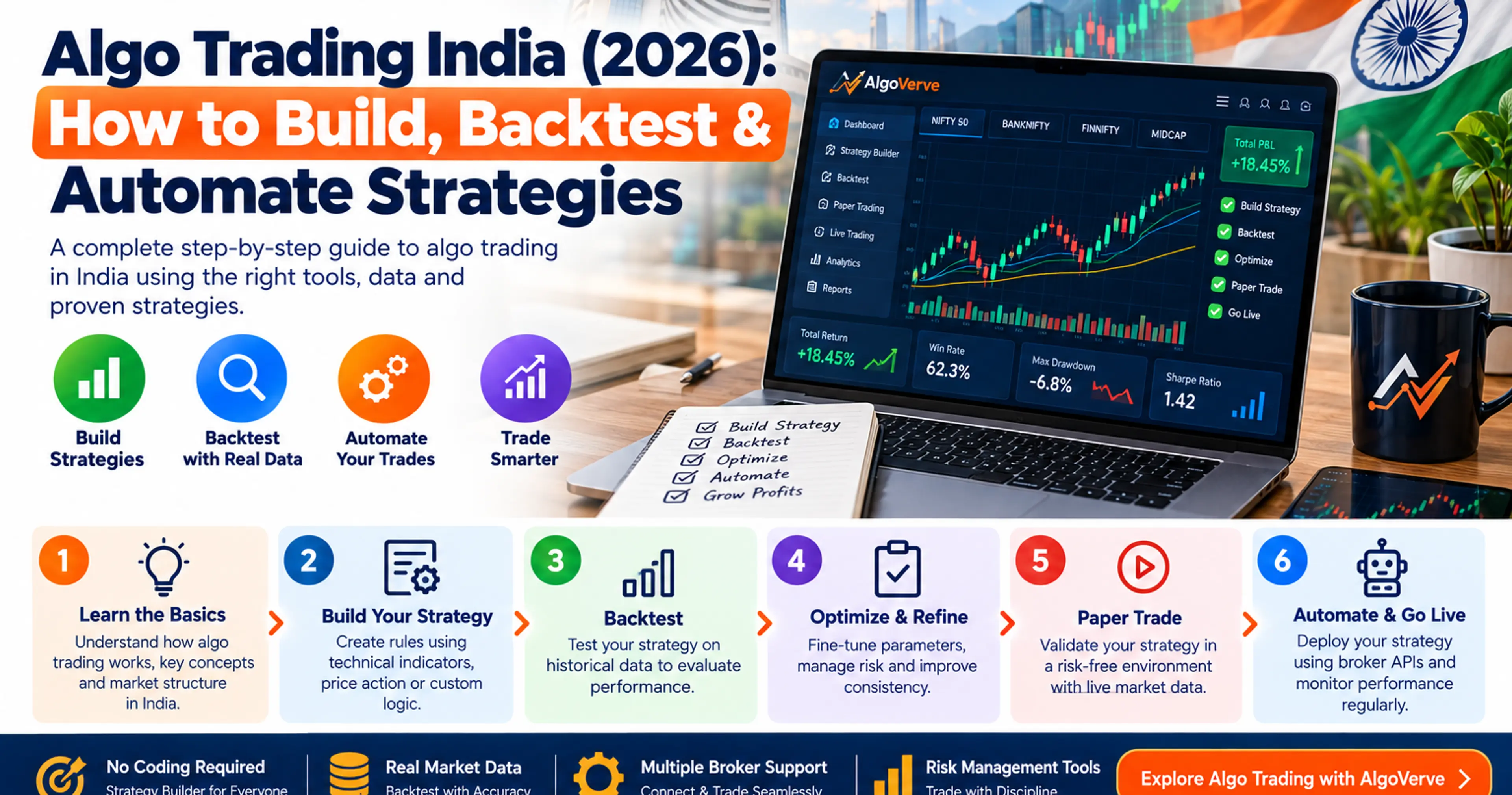
A trading idea can't be an online trading strategy. Buying when RSI becomes oversold sounds like following a rule. An incomplete rule. Buying what instrument, within what timeframe, and with what RSI period? What justifies the entry? What quantity will you buy? And when do you exit? Do you stay when prices start falling? Is there one signal to throw you out of or pull into a trade? With a defined trading strategy, you answer those questions. Ideas turned into a set of rules to follow consistently are a strategy. Make it worthy enough.
You test a strategy. You can't test impressions.
Backtesting: All About Asking the Past Better Questions
A defined strategy needs to be tested against historical market data. This is backtesting.
Don't ask if it can make money. Ask what these rules have done under the historical market data. A chart glance won't reveal that. Notice how often the strategy wins. How severe were the losses or the max drawdown? How long did the losing streaks last? The frequency of the trade, particular market regimes, and transaction costs all materially change the outcome.
But also beware the beautiful backtest. Slight alterations in the entry, little adjustments to the stop-loss, changing the holding period — all those might suddenly make the equity curve look magnificent and make you think you may have discovered a better strategy. That's strategy overfitting: designing rules for an extreme historical data match that then struggle in real trading environments.
Take backtests as evidence about behaviours, not as a machine manufacturing certainty. Change one meaningful variable at a time for a more useful comparison. But an unsuccessful variation isn't wasted work either.
Backtests also have their limits. Real market execution conditions may not reproduce a historical simulation perfectly, filling orders differently or moving prices between signal and execution. This can change slippage, make liquidity disappear, and stretch latency. It might also make you underestimate transaction costs. Assumptions and limitations materially affect results. This is why a backtest should not be treated as a permission to move directly from historical results to real capital. There is another step worth taking.
Forward Test: Also Called Paper Trading
Forward testing is running a strategy with zero risk against live market data. This doesn't require putting in real trading capital.
Its purpose is different from a historical backtest. It shows what happens when your strategy encounters the currently moving market. That can reveal practical issues involving execution, order behaviour, spreads, timing, and the gap between a theoretical trade and an actual one. The progression is therefore straightforward:
Define the idea → Build the rules → Backtest → Forward test → Consider live deployment
None makes the future safe. Nothing does. You can only reduce the risk by avoiding some uncertainty before real money enters real trade. Avoiding unwanted surprises is risk management.
You've just read the theory. Now run it. Build your rules, backtest them against historical data, and forward-test them on live Nifty and Sensex markets without risking a rupee.
👉Try It Free on Algoverve →
Profits Demand Proper Risk Management
Why Does Position Sizing Matter?
How much you can make shouldn't be your concern first. Find out how much you can lose. Your position sizing will determine how much capital you've exposed to a trade. With a stop-loss, you can define an exit when a trade moves against you. It doesn't guarantee the exact execution price in every market condition. A drawdown tells you how deeply your account or strategy has fallen from its previous high.
A rule of thumb is:
Loss of Your Capital Gain Needed to Recover
10% 11.1%
20% 25%
50% 100%
What Makes a Trade Profitable?
A trader can lose money while being right on more trades than not. The arithmetic here, for example. A strategy wins 40% of its trades. It might sound terrible, but say its average winning trade makes ₹3,000 while its average losing trade loses ₹1,000. What then?
Over 100 Trades Result
40 winning trades × ₹3,000 +₹1,20,000
60 losing trades × ₹1,000 −₹60,000
Net +₹60,000
Expectancy per trade +₹600
On the flip side, a strategy with 70% wins can still be a loss if its 30% losses are large enough.
Look beyond the win rate. A high win rate is not the same thing as a profitable strategy. Just like a handsome equity curve isn't evidence of tomorrow behaving like yesterday.
Check instead:
>Average profit and loss per winning and losing trade.
>Expectancy and profit factor.
>Maximum drawdown and losing streaks.
>Trade frequency and transaction costs.
>Consistency of the results across different markets.
Start Trading With These 5 Questions
Education should come before live capital. Start by understanding the instrument and the market in which it trades.
Then define what you are trying to do. Write down the rules. Decide how much capital you are willing to risk. Test the strategy against historical data. Look beyond the headline return.
Next, examine drawdown, losing streaks, expectancy, costs, and behaviour across different conditions.
If the results come in interesting, forward-test the same rules against live market data. Only then may you consider a live, strategic deployment.
Ask yourself these questions:
1. What exactly are you trading?
2. Why are you entering?
3. What tells you to exit if you're going right?
4. What tells you to exit if you're going wrong?
5. How much loss can you bear if the trade does not go as expected? Those differentiate an idea from a strategy. A successful trade from a not-so-successful one.
In Conclusion
There you are! All that you need to do now is watch and test the market before you start trading live.
Stop guessing. Start testing. Algoverve gives you one place to build your strategy, backtest it against historical data, and paper-trade it on live markets — before a single rupee is at risk.
👉Build Your First Strategy Free →
Disclaimer: This article is for educational purposes only and is not investment advice. Trading in financial markets involves risk of loss. Please consult a SEBI-registered advisor before trading with real capital.